Overview
What Are Micropiles?
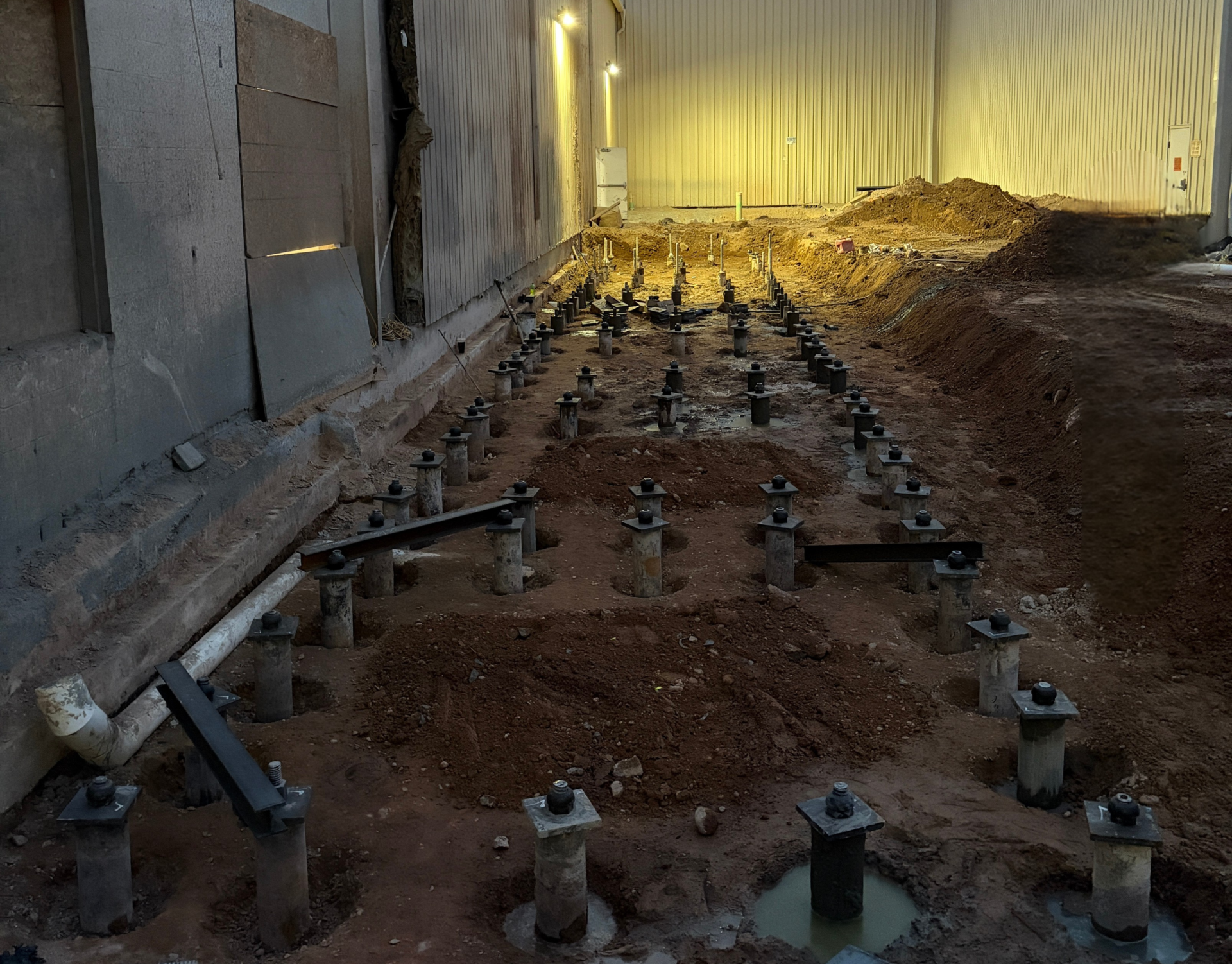
Micropiles are small-diameter (typically 5″–12″), drilled and grouted deep foundation elements that transfer structural loads through weak or unstable soils into competent bearing strata. Originally developed in Italy in the 1950s for underpinning historic structures, micropiles are now one of the most versatile foundation systems available for new construction and retrofit applications.
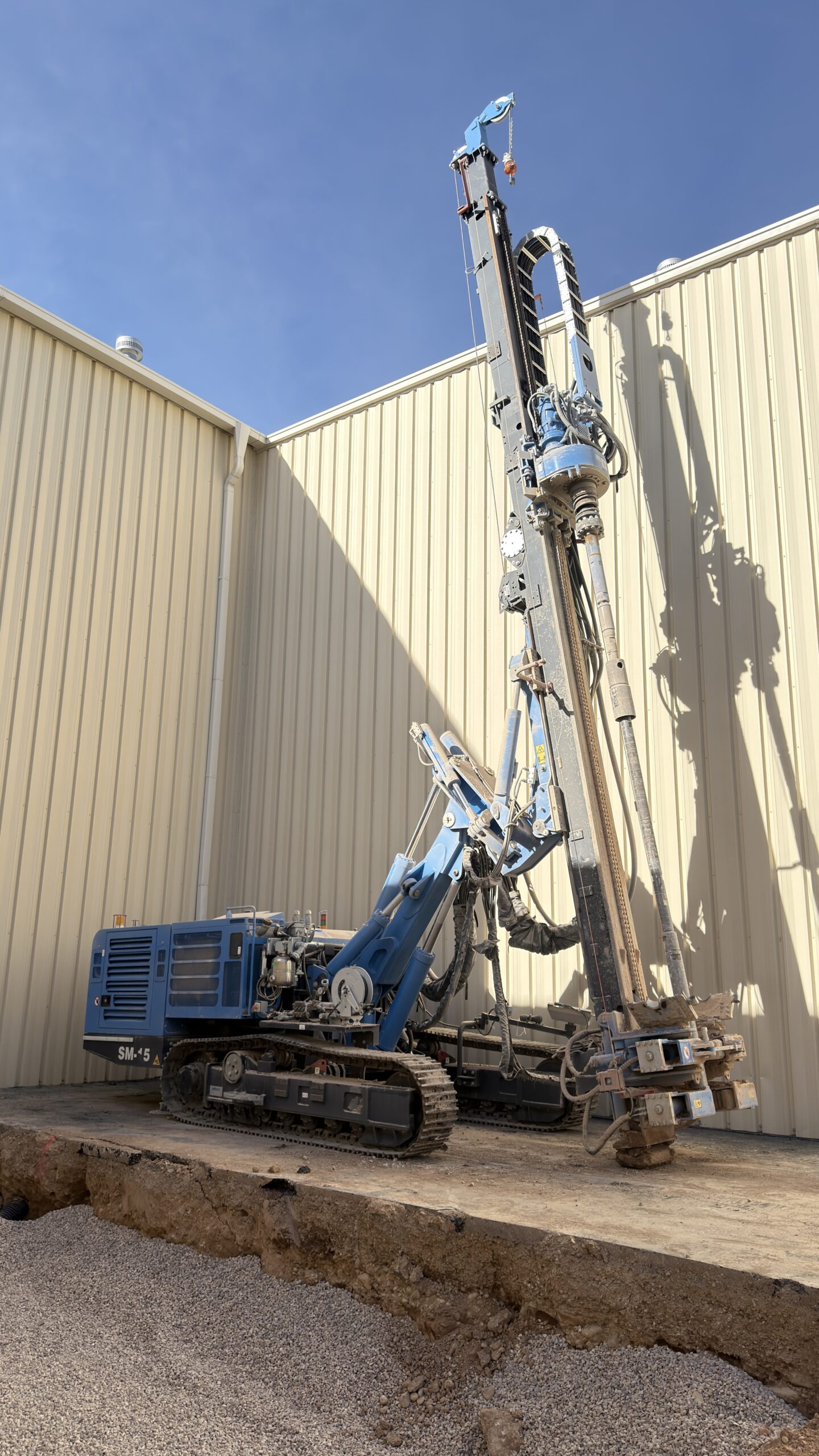
Rocky Mountain Micropiles installs both hollow bar and solid bar micropile systems, selecting the right approach based on project loads, soil conditions, and site constraints. Hollow bar micropiles use a simultaneous drill-and-grout method that accelerates installation, while solid bar (cased) systems provide maximum structural steel capacity for the highest-demand applications. Both systems create a high-strength grouted element bonded to the surrounding soil or rock — particularly effective in Utah’s variable geology, from expansive clays and collapsible soils to fractured bedrock along the Wasatch Front.
Every micropile we install is designed to meet or exceed FHWA (Federal Highway Administration) guidelines and IBC (International Building Code) requirements, with load testing available to verify performance on critical projects.
Technical Data
Micropile Specifications
Key technical parameters for our hollow bar and solid bar micropile systems. Actual design values are project-specific and determined by geotechnical analysis.
Small footprint allows installation in confined spaces, near existing structures, and inside buildings with limited overhead clearance.
Ultimate capacities exceeding 1,000 kips achievable in competent rock. Working loads typically 200–500 kips depending on soil conditions and bar size.
Continuous hollow bar sections are coupled to reach depths exceeding 200 feet, penetrating through problem soils to reach competent bearing strata.
Hollow bar systems drill and grout simultaneously for speed. Solid bar (cased) systems provide maximum structural steel area for the highest load demands. We select the right system for each project.
All designs follow FHWA-NHI-05-039 micropile design guidelines and IBC code requirements. Load testing per ASTM D1143 available on request.
Micropiles resist both compression and tension loads, making them ideal for uplift resistance, seismic applications, and combined loading conditions.
Applications
Where Micropiles Are Used
Micropiles are specified by engineers when conventional deep foundation methods are impractical due to access constraints, soil variability, vibration sensitivity, or the need for high-capacity elements in a compact footprint.
Discuss Your ProjectNew Commercial Construction
Deep foundation support for commercial buildings, retail, mixed-use, and multi-story structures on challenging sites.
Infrastructure & Bridges
Abutment and pier foundations, retaining wall support, and highway infrastructure where vibration and access are constrained.
Underpinning & Structural Retrofit
Stabilization of existing structures experiencing settlement, load increases, or adjacent construction effects. Works inside buildings with limited headroom.
Seismic Retrofit & Uplift Resistance
Micropiles resist both compression and tension, providing uplift capacity critical for seismic loading, tower bases, and structures in high-wind zones.
Limited Access & Confined Sites
Compact drilling equipment operates in tight spaces — basements, utility vaults, between existing structures, and on steep terrain where larger rigs can’t reach.
Industrial & Utility Support
Foundations for equipment pads, transmission towers, pipeline supports, and industrial facilities requiring high-capacity, low-vibration installation.
How It Works
Micropile Installation Process
From site evaluation to load verification — our process ensures every pile meets design requirements.
Site Evaluation
Review geotechnical reports, assess site conditions, access constraints, and utility locations.
Engineered Design
Pile layout, bar selection, grout design, and bond zone calculations per FHWA guidelines and project specs.
Drill & Grout
Hollow bar drills and grouts simultaneously; solid bar systems are drilled, cased, and grouted in sequence. Both achieve a continuous bonded pile element.
Pile Cap Connection
Steel plate or cap connects the micropile to the structure’s footing, grade beam, or foundation element.
Load Verification
Production logs, grout records, and optional load testing per ASTM D1143 verify each pile meets design capacity.
Comparison
Micropiles vs. Alternative Foundation Systems
When project conditions demand a high-capacity, low-impact foundation solution, micropiles consistently outperform traditional alternatives.
vs. Driven Piles
No vibration, no noise complaints, no heave risk. Micropiles install in confined spaces where pile-driving equipment can’t operate — ideal for urban and retrofit work.
vs. Drilled Shafts
Smaller equipment footprint, no spoils disposal issues with hollow bar systems, faster installation. Comparable capacity in rock at a fraction of the shaft diameter.
vs. Helical Piles
Significantly higher load capacity — micropiles achieve 1,000+ kips in rock vs. typical helical limits of 50–75 kips. Grout bond provides superior performance in variable soils.
vs. Push Piers
Push piers rely on structure weight for reaction — limiting capacity to light residential applications. Micropiles are independently grouted into bearing strata for far greater loads.
Featured Project